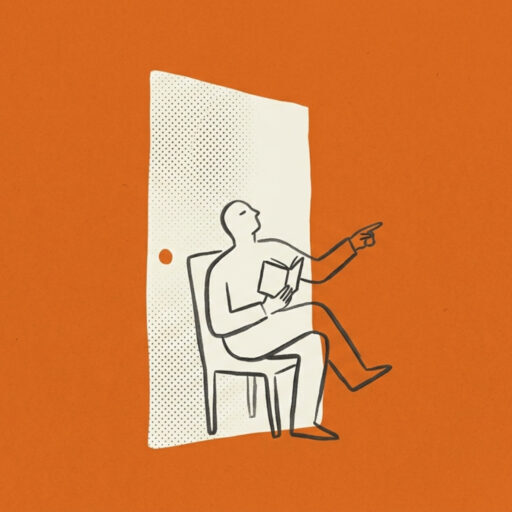


Yamashita regretted coming to Horihorimura. [1]
He had heard the rumors before setting out. That village had a code.
Under that code, the residents would dig and pry into absolutely everything. [2]
But Yamashita had not been worried. He was a city businessman. He figured he could handle it.
The moment he crossed the village boundary, he felt eyes on him. He straightened the collar of his suit and walked toward the center of the village.
His phone rang. He stopped and answered.
“Hold on a moment. Can you risuke that for me?” [3]
The word he said into the phone changed the air around him.
A man stepped into his path.
“What is this risuke?”
Yamashita lowered the phone from his ear. The man was serious.
“It means adjusting a schedule.”
“Then just say ‘please adjust the schedule,’ would you not?”
“Well, yes, but it is a common expression these days.”
“Common where, exactly?”
The man did not give an inch. The standoff went on for thirty minutes.
When Yamashita finally regained his composure, the word “code” drifted through his mind. He asked the man:
“Why are you pushing back this hard?”
The man went quiet. Then, in a low voice, he answered.
“Because you addressed me without any honorific.”
“I beg your pardon?”
“You said my name to someone else, bare, without a title.”
Yamashita had no idea what the man meant. He did not even know this man’s name.
He tilted his head.
“What do you mean?”
The man opened his mouth slowly.
“My name is Risuke.” [4]
[1] “Horihorimura” is a fictional village name built from the Japanese verb “horu,” meaning to dig. It deliberately echoes the fixed phrase “ne-hori ha-hori” (根掘り葉掘り), which means to ask exhaustive, prying questions about every last detail.
[2] The original uses “ne-hori ha-hori” directly here, the phrase on which the village name is a play.
[3] “Risuke” (リスケ) is contemporary Japanese business jargon, a clipped form of the English word “reschedule.” It is pronounced identically to 理助 (Risuke), a Japanese given name.
[4] The twist: the villager’s name is Risuke. When Yamashita said “risuke” into his phone, the man heard his own name spoken aloud to a third party, without any honorific suffix such as “-san.” In Japanese social convention, omitting an honorific when referring to someone is considered disrespectful, and the villager took it as a personal slight.
—
【1分小説】堀堀村(Horihorimura)の掟
山下は堀堀村に来たことを後悔していた。
来る前から噂は聞いていた。あそこの村には掟があると。
その掟に従い、住人は根掘り葉掘り聞いてくるという。
だが山下は気にしなかった。自分は都会のビジネスマンだ。うまくあしらえると思っていた。
村の入口を越えた途端、視線を感じた。山下はスーツの襟を正し、村の中心部へと歩き出した。
電話が鳴った。山下は立ち止まり、答えた。
「ちょっと待ってください。その件は一度リスケしてください。」
電話口に向かって言ったその言葉が、空気を変えた。
一人の男が道をふさいだ。
「リスケって何や」
山下は電話を耳から離した。男は真剣だった。
「予定を調整することです」
「予定を調整しておいて、って言えばええやろ」
「まあ、そうなんですが、一般的な言い方として」
「どこが一般的なんや」
男は一歩も退かなかった。押し問答は三十分続いた。
山下は落ち着きを取り戻した時、掟という言葉が脳裏をよぎった。
男に聞いた。
「なぜそこまで突っかかってくるんですか」
男は黙った。それから、低い声で答えた。
「呼び捨てにされたからや」
「はい?」
「俺のことを呼び捨てにしたやろ」
山下には意味が分からなかった。自分はこの男の名前すら知らない。
山下は首を傾けた。
「どういうことですか」
男はゆっくり口を開いた。
「俺の名前、理助やけど」